Skip to content
// the pilot · built for the Indian gate

We're pre-launch.
Here's what we built for.

Atlas hasn't dressed up fake deployments. The ANPR → VAHAN → audit-log pipeline is built and verified on the bench; the first Mumbai RWA pilot is ahead of us. Below are the real gate conditions the product is engineered for, and the honest targets a 30-day pilot puts a number on, measured on your cameras, in your weather.

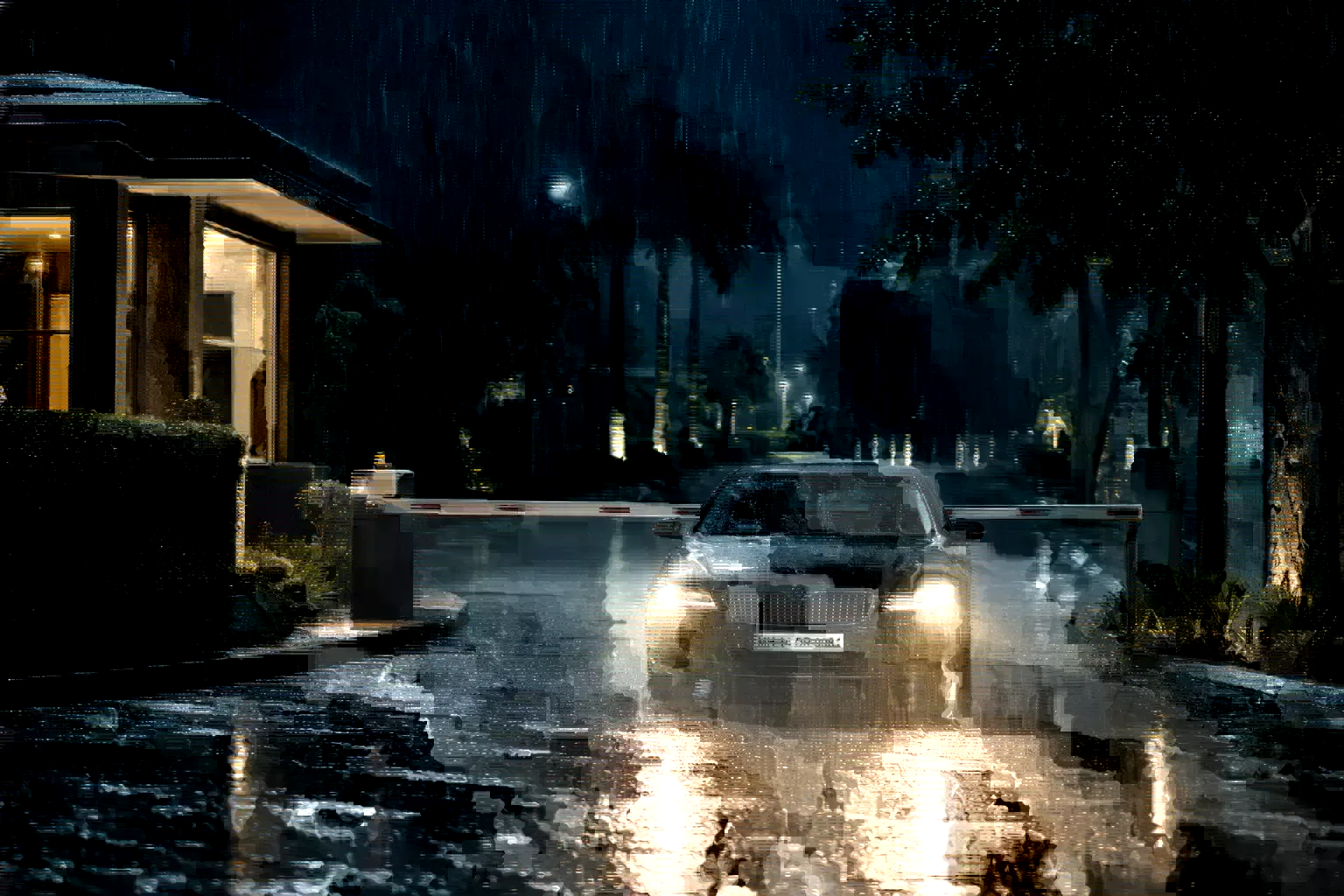
Reading the plate through July rain.

Most anti-blur work is the camera's job, not ours. We're honest about the split, and we spec the camera.

Rain streaks, sodium-vapour glare, and headlight bloom are what actually beat ANPR at an Indian gate. The pipeline answers with a motion-gated trigger that grabs a short burst and keeps only the sharpest frame, so it never reads from a single motion-blurred image.

If even the sharpest frame is below a focus floor, Atlas flags it for a quick manual review rather than guess from an image it can't trust, so the read still makes it into the log. With a dedicated gate camera (1080p, 3–5 m back, 15–25° down) the read holds where a wide overview camera fails.

The honest target for a first deployment is ≥90% read accuracy, not a marketing 99%. The pilot measures the real number on your gate, in your weather, before anyone signs.

Catching a borrowed registration.

A cloned plate is a mismatch between a registration and the vehicle wearing it. We're building Atlas to catch the mismatch.

Cars borrow genuine vendor registrations to skip the visitor flow. Atlas is building a confidence-graded identity for each vehicle (fusing the plate read with VAHAN class, make and colour, and entry pattern) to score how well the registration matches the vehicle in front of the camera.

When that confidence drops (a hatchback wearing an SUV's plate), Atlas is designed to alert the guard instead of waving it through, and to write the frame and the mismatch straight into the access-controlled, encrypted audit log.

Keeping the boom moving.

Allow, deny, and VIP lists live on the box, so a known plate clears the gate against the local list.

Resident, vendor, and VIP lists live on the edge box, so a known plate is matched against the local list. A flagged plate (stolen or blacklisted) pings the guard's phone over WhatsApp in about three to five seconds of the read.

Visitor pre-authorisation is lightweight by design: a resident WhatsApps a plate, Atlas auto-approves and logs it. Atlas complements a society's existing management app on the security layer; it never touches billing or the resident ERP.

Every entry and exit lands in a searchable log, so a parking dispute is settled from the record in seconds rather than a morning of scrubbing DVR footage.

Nothing is lost when the link drops.

Raw video always stays on-site; nothing captured is lost when the link drops.

Raw video always stays on-site, and every read is written to a local, access-controlled audit log at the gate, so nothing is lost.

Every event is numbered in order and delivered to the dashboard when the link returns, so nothing duplicates and nothing is lost. Raw video never leaves the premises, which is the DPDP compliance architecture, by design.

Detect the person, never the face.

Shape and movement, judged by the clock, never identity.

The people signal is in the Atlas pipeline, designed so detection, pose, and dwell all resolve on the edge box. After hours, an unknown person inside a restricted polygon raises a local alert; the same crossing during operating hours is just a log entry.

What syncs is an event ('unknown person, restricted zone, 02:14'), never a face vector. That on-device boundary is what makes person detection deployable under the DPDP Act.

You can walk this design end-to-end today in the interactive people preview on the demo page.

// the 30-day pilot protocol

The pilot is the proof.

No screenshots of someone else's gate. The way you find out whether Atlas works is to run it on yours, under a protocol designed to be honest about what it can and can't do.

  1. 01
    Audit the gate first

    We look at the camera, angle, lighting, and lane before quoting. A bad gate is a camera spec, not a software setting, and we say so up front.

  2. 02
    48-hour shadow mode

    Atlas runs silently for two days (logging every read, zero alerts) so you see the real accuracy on your gate before a single notification fires.

  3. 03
    30-day pilot · ≥90% read

    The honest first-deployment SLA is ≥90% plate read with a flagged-plate alert to the guard in seconds. Metrics are agreed up front, measured on your site.

  4. 04
    DPA attached, data minimised

    A Data Processing Agreement under the DPDP Act ships with the pilot. Raw video stays on your NVR, and rights are anonymised-aggregate only.

  5. 05
    Uninstall on cancel

    If the pilot doesn't beat what you run today, we uninstall the unit, no charge. Atlas maintains the hardware and owns it; you get a service.

Be the first gate.
Next month.

A founding pilot site shapes the product and locks in early pricing. Thirty days, your gate, the real numbers.